
Battery Management Systems & Cloud Telematics
High-precision cloud-connected Battery Management Systems engineered for commercial lithium-ion and LiFePO4 packs. Monitor individual cell millivolts, balance strings actively, prevent thermal runaway, and maximize cycle life with real-time 4G IoT telematics across Bangladesh.
Custom battery strings from 2S to 32S — our Dhaka engineering lab configures CAN, RS485 & UART protocols.
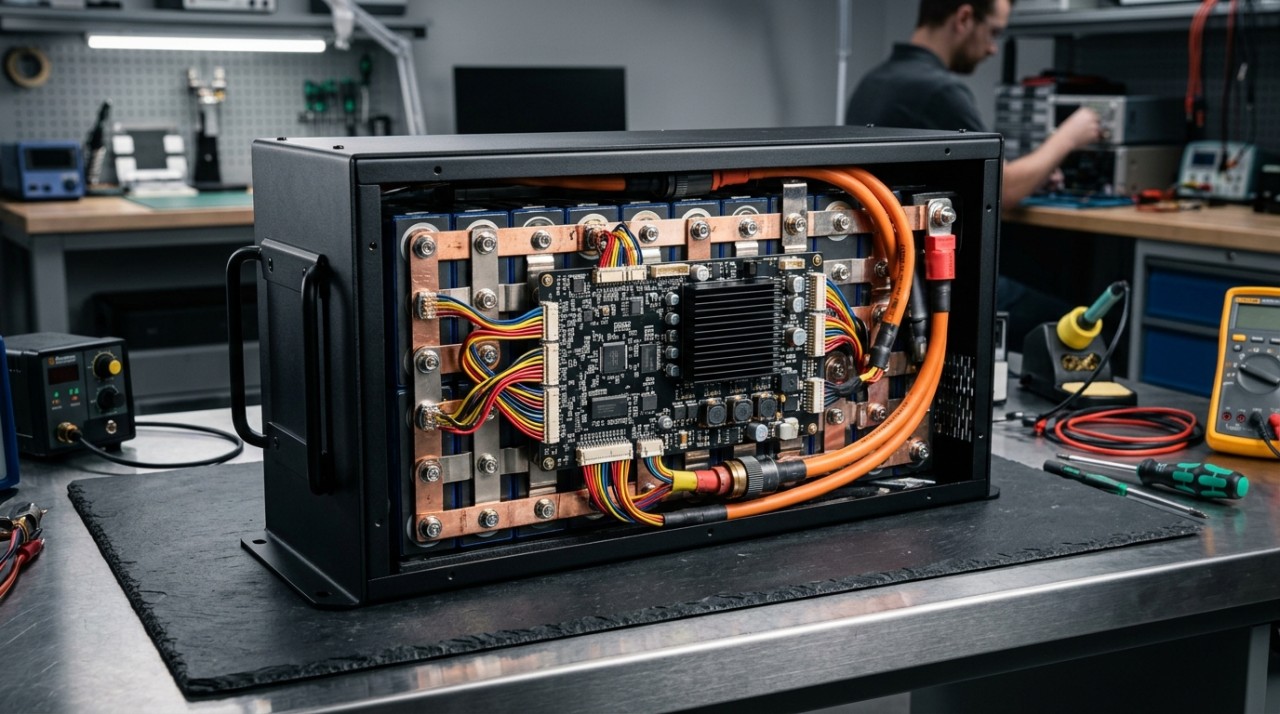
What is a Cloud Battery Management System (BMS)?
A Cloud BMS connects individual lithium-ion or LiFePO4 battery pack cells to our 4G IoT gateway, monitoring microsecond cell voltages, internal resistance, and temperatures. By balancing strings actively and providing early thermal runaway alerts, it prevents catastrophic battery fires and doubles commercial pack lifespan.
Protect high-value lithium packs from premature failure
Battery packs are the single largest investment in modern electric and solar operations. Real-time BMS telematics provides defensible warranty auditing and cell-level balancing.
Without cell-level telemetry, one weak cell destroys the entire battery pack
In multi-cell lithium batteries, individual cell degradation remains completely invisible to standard GPS trackers. A single cell experiencing voltage drift or internal resistance spikes causes severe overcharging in neighboring cells — triggering thermal runaway, swelling, and multi-lakh-Taka pack write-offs.

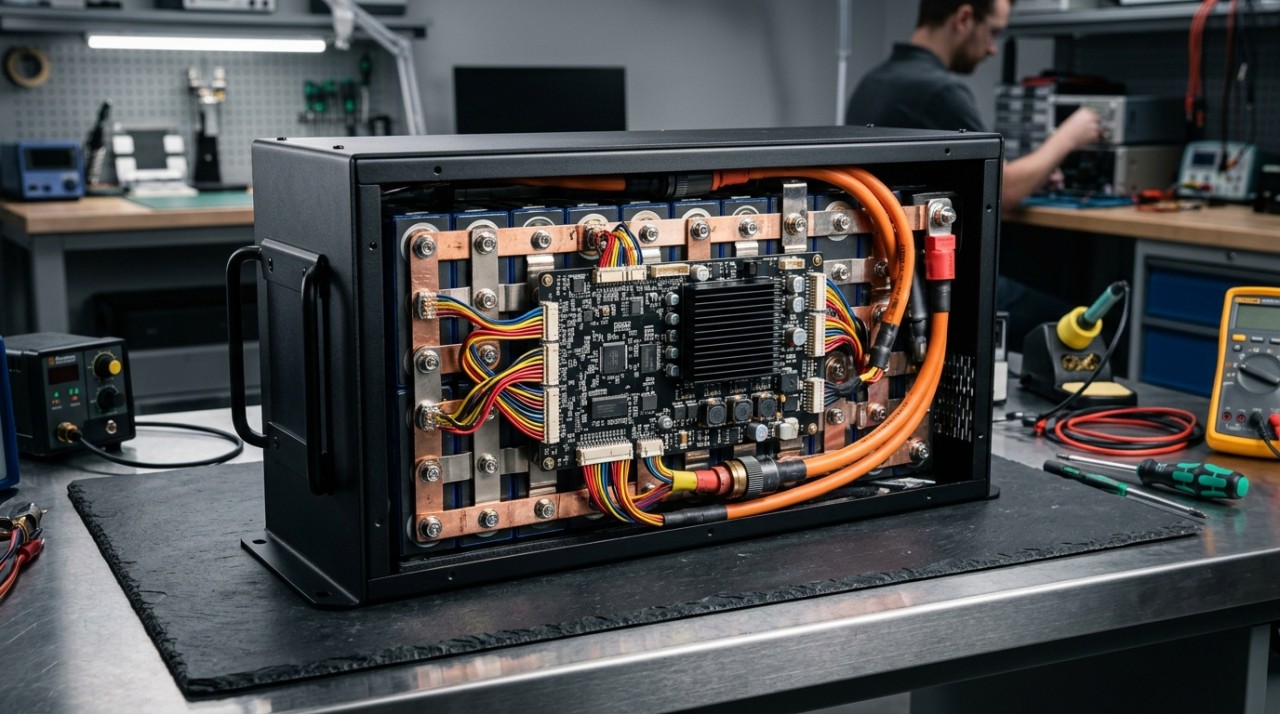
Real-time millivolt balancing, active thermal cutoff, and cloud health auditing
ADL Cloud BMS interfaces directly with battery packs via CAN-bus and RS485. It actively shuttles charge from higher-voltage cells to lower-voltage cells, monitors temperature probes across busbars, and continuously streams health diagnostics to our centralized cloud portal.
Engineered for heavy-duty commercial battery packs
Modular hardware architecture designed for 2S through 32S strings, high-voltage battery banks, and solar energy storage.
Cell Millivolt Telemetry
Continuous 24-bit analog-to-digital sampling tracking every individual cell down to ±1mV precision for instant imbalance discovery.
Active Cell Balancing
Dynamic bidirectional charge transfer prevents overcharging of healthy cells while bringing lower cells to parity without thermal waste.
Thermal Runaway Shield
Multi-probe NTC thermistor network detects localized busbar hot spots, triggering automated disconnects prior to thermal propagation.
SoC & SoH Coulomb Counting
Hall-effect and shunt current integration delivers true usable State of Charge (SoC) and tracks capacity degradation (State of Health).
CAN & RS485 Bus Integration
Seamless protocol compatibility with leading inverters, motor controllers, and chargers (CAN 2.0B, Modbus RTU, UART).
Cloud Warranty Auditing
Immutable cloud ledger tracking total charge cycles, depth of discharge, and operating temperatures for supplier warranty enforcement.
Proven across Bangladesh industrial battery deployments
LiFePO4 Commercial Packs
Commercial Vehicle Traction Batteries
High-vibration lithium battery packs for commercial vans, forklifts, and three-wheelers with active millivolt balancing and automated low-voltage cutoffs.
Embedded Telematics
BMS IoT Controller & Telemetry Hub
Compact IoT gateway module connecting any third-party BMS (Daly, JK, ANT, PACE) to ADL cloud telemetry via RS485 Modbus or CAN-bus.
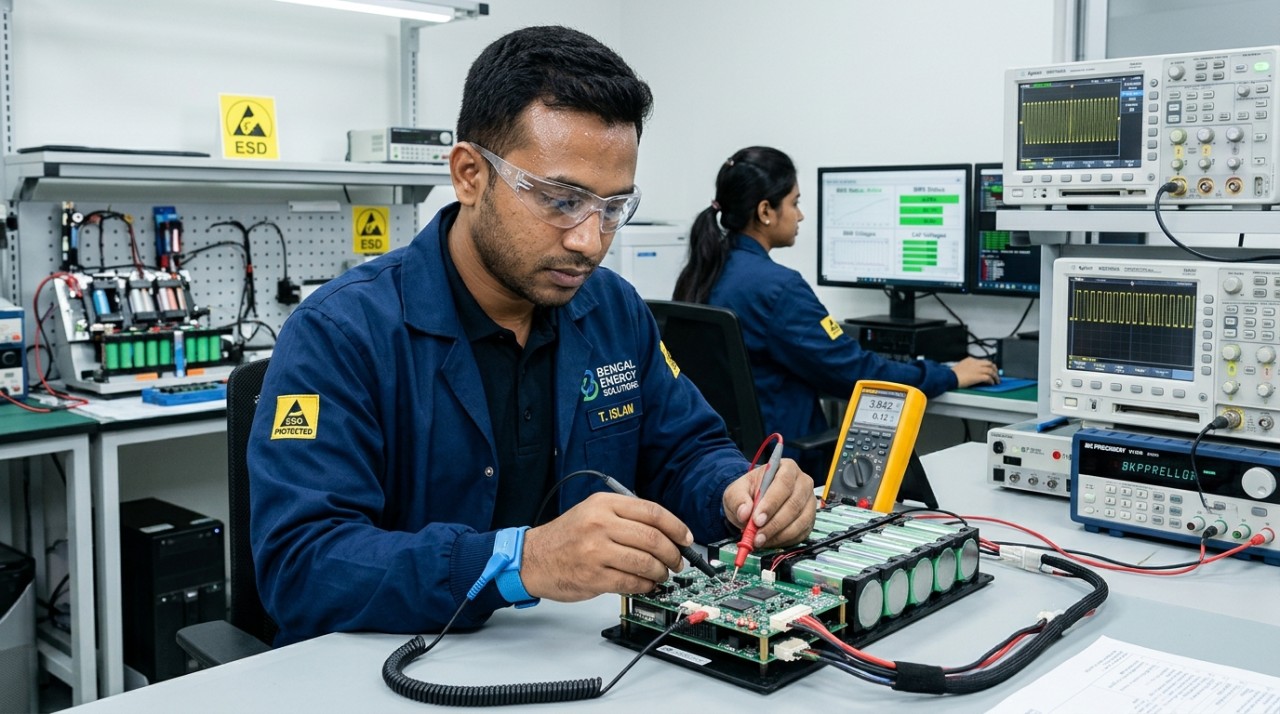 Lab Certification
Battery Assembly & Lifecycle Testing Labs
Quality control monitoring for domestic battery assemblers in Bangladesh, verifying cell grading, capacity matching, and burn-in performance.
 BESS & Microgrids
Stationary Energy Storage (BESS) & Telecom Banks
Continuous telemetry for high-capacity battery banks supporting solar microgrids, telecom base stations, and industrial UPS backup facilities.
Standard Offline BMS vs. ADL Cloud-Connected BMS
| Feature | Standard Offline BMS | ADL Cloud BMS Telematics |
|---|---|---|
| Cell-Level Visibility | None (Only pack gross voltage) | ±1mV Individual Cell Live Stream |
| Cell Balancing Method | Passive heat burn (Inefficient) | Active Bidirectional Charge Shuttling |
| Thermal Runaway Warning | Trip only after smoke/flame | Predictive Delta-T Rise Alerts |
| Warranty Ledger | Manual dispute with manufacturer | Immutable Cloud Log of Cycles & Temps |
| Connectivity | None or short-range Bluetooth | 4G LTE Nationwide Cloud Telematics |
Frequently Asked Questions
Can ADL BMS work with existing third-party battery packs?
Yes. If your pack already has a CAN or RS485-enabled BMS (such as Daly, JK, ANT, or PACE), our external 4G IoT gateway connects directly to the communication port without altering internal pack wiring.
What battery chemistries does the system support?
The ADL BMS platform supports Lithium Iron Phosphate (LiFePO4), Lithium Nickel Manganese Cobalt (NMC), Lithium Titanate (LTO), and lead-acid strings with dedicated charge and discharge voltage profiles.
How does active cell balancing double battery life?
Without balancing, the capacity of a battery pack is limited by its weakest cell. Active balancing redistributes charge dynamically during both charge and discharge cycles, preventing weak cells from hitting damaging low-voltage thresholds.
Ready to eliminate battery failure and extend pack lifespan?
Connect your lithium packs to ADL Cloud BMS. Request an engineering consultation and live telemetry demonstration today.